

If you’ve been wondering whether Apple missed the boat on foldables, Samsung just answered that question for you. The iPhone Ultra — Apple’s first foldable iPhone — is set to arrive this September, years after Samsung introduced the original Galaxy Fold. That gap used to look like hesitation. Now, with the Samsung Galaxy Z Fold 8 selling faster than Samsung can ship it, that gap looks a lot more like strategy.
In this article, you’ll learn exactly why Apple’s timing works in its favor, what went wrong with Samsung’s early folding smartphones, how the visible crease problem finally got solved, and what all of this means if you’re trying to decide between a Samsung foldable today or Apple’s version this fall. We’ll also break down the real specs, the market numbers, and the practical trade-offs — no vague guessing, just what’s actually known right now.
Why Apple Didn’t Rush Into Foldables
Apple is famous for entering categories late and, more often than not, dominating them once it arrives. The foldable iPhone is shaping up to be another example of that pattern. While Samsung launched its first folding phone back in 2019, Apple spent years watching, testing, and waiting for the underlying display technology to actually be ready for a mainstream audience.
That wait wasn’t arbitrary. Early folding smartphones had real, well-documented problems, and Apple’s leadership has talked openly about wanting to avoid shipping a first-generation product with first-generation flaws.
Samsung’s Cautionary Tale — The 2019 Galaxy Fold Display Failure
The clearest example of why patience mattered is the original Galaxy Fold. When review units first shipped in 2019, journalists found the flexible screens failing within days — some after peeling off what turned out to be a protective layer that looked removable but wasn’t, others after debris worked its way under the display and caused permanent damage. The problems were serious enough that Samsung delayed the launch by months and had to fully redesign the hinge and screen protection before the device reached consumers.
That episode became the industry’s go-to case study in what happens when flexible display tech ships before it’s ready. It’s also the reason display crease and durability concerns have followed every Galaxy Z Fold generation since — even as the hardware steadily improved.
What Apple Was Actually Waiting For
Apple’s foldable strategy has centered on three specific requirements, based on reporting from supply chain analysts and Apple-focused outlets:
- Durability that matches a normal iPhone. Apple doesn’t want a device that needs a warning label about how to open it.
- A crease that’s effectively invisible. Not “reduced,” but close enough to unnoticeable that it doesn’t undercut the premium feel Apple is known for.
- Manufacturing scale. A foldable Apple device needs to be produced in the tens of millions, not the low millions, which requires a mature supply chain most OLED display makers didn’t have a few years ago.
Reports of Apple’s Design Engineers Helping Samsung Solve Crease Issues
Here’s a detail that doesn’t get enough attention: according to 9to5Mac, Apple reportedly sent its own design engineers to work directly with Samsung’s display division to help solve the screen crease problem — because Samsung is one of the primary suppliers building foldable display panels for Apple’s own device. In other words, Apple wasn’t just watching Samsung’s mistakes from a distance. It was actively involved in fixing the underlying display tech that both companies now rely on.
That’s an unusual level of cross-company collaboration between two fierce competitors, and it explains why the Galaxy Z Fold 8 and the upcoming iPhone Ultra reportedly share a very similar panel architecture.
How Samsung Fixed the Crease Problem (and Why It Matters for the iPhone Ultra)
The creaseless display claims around the Galaxy Z Fold 8 aren’t just marketing. There’s real engineering behind the improvement, and understanding it tells you a lot about what to expect from Apple’s version.
Dual Ultra Thin Glass (UTG) Structure Explained
Previous Galaxy Z Fold models used a single layer of Ultra Thin Glass (UTG) on top of the flexible OLED display to protect it while still allowing it to bend. For the Fold 8 series, Samsung applied UTG to both the top and bottom of the panel — a dual-layer structure instead of a single one. That extra layer of glass on the underside helps distribute the mechanical stress that builds up every time the phone folds and unfolds, which is one of the main causes of a visible dent forming along the fold line over time.
Laser-Drilled Micro Perforations and Stress Distribution
Samsung also introduced a new backplate design featuring laser-drilled micro perforations — tiny holes engineered into the support layer beneath the display. This structure, first showcased publicly at CES 2026, improves light dispersion across the fold area and helps the panel flex more evenly, rather than concentrating stress in one narrow line. Combined with an optimized laminate structure, this is the core of Samsung’s crease-free engineering push.
How Much Has the Crease Actually Improved?
Based on early testing and reporting, the Galaxy Z Fold 8’s crease visibility is estimated to be roughly 20% less noticeable than the Galaxy Z Fold 7’s. That’s a meaningful, measurable jump — not a rounding error.
For the iPhone Ultra, Apple is reportedly taking its own approach: a new adhesive layer designed to spread fold stress across the entire display stack, which Apple is said to be pursuing “regardless of cost.” Bloomberg’s Mark Gurman has described the result as reduced rather than fully eliminated — an important distinction if you’re expecting a completely invisible fold line on day one.
Key takeaway: Neither company has fully solved the crease. Both have made it dramatically less noticeable through different engineering paths — Samsung through glass and backplate structure, Apple through adhesive and stress distribution.
Galaxy Z Fold 8’s Launch Numbers Show the Market Is Finally Ready
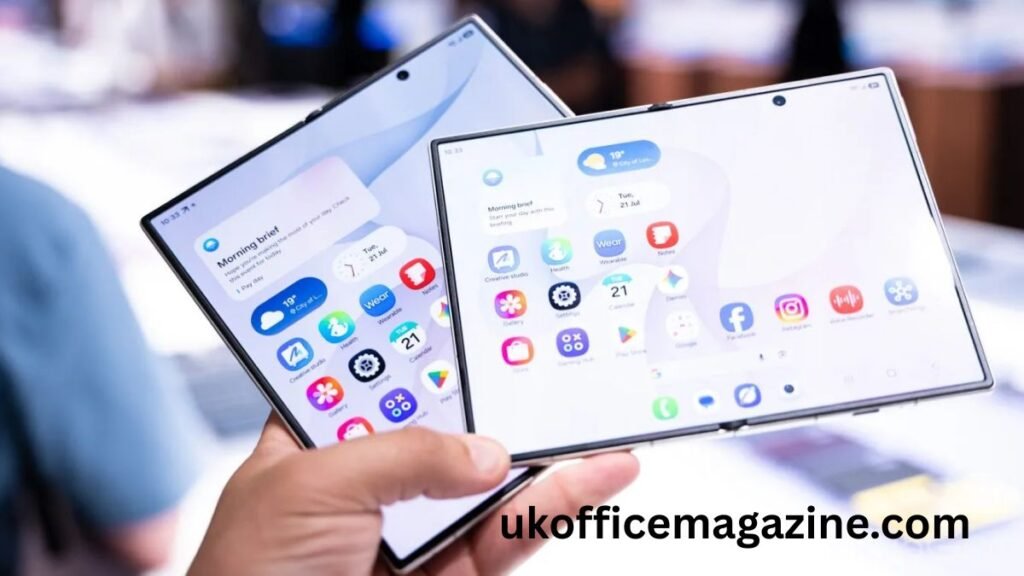
Specs and engineering only matter if people actually buy the phone. On that front, the Galaxy Z Fold 8 numbers are hard to ignore.
Demand Up 3x Over Fold 7, Following Last Year’s 50% Jump
According to 9to5Mac’s reporting, consumer demand for the new Galaxy Z Fold 8 series is running roughly 3x higher than initial demand for the Fold 7 — and shipping has been delayed across the board as a result. That builds directly on the previous generation’s growth: the Fold 7 saw a 50% increase in demand over its predecessor. Tom’s Guide separately reported that Galaxy Z8 Series pre-orders were up 30%, with roughly half of buyers choosing the wider Fold 8 model specifically.
That’s two consecutive years of accelerating growth, not a one-time spike — which is a much stronger signal for the health of the folding smartphone market overall.
What’s Driving the Surge — Price, Design, or the Crease Fix?
A few factors appear to be compounding at once:
- The near-creaseless display is the most visible, headline-grabbing improvement, and it directly addresses the most common complaint people have had about foldables since 2019.
- Longer market exposure means more people have now used a foldable, seen one in person, or watched a friend’s, which lowers the psychological barrier to buying one.
- New design options, including the renamed Galaxy Z Fold 8 (wider, more phone-like) alongside the Galaxy Z Fold 8 Ultra (Samsung’s traditional tall, narrow flagship), give buyers a genuine choice between two different folding smartphone philosophies instead of one-size-fits-all.
Shipping Delays as a Signal of Real Consumer Adoption
It’s worth pointing out that shipping delays can mean two very different things: supply problems, or demand that outpaced even optimistic forecasts. In this case, the delays are being framed by outlets covering the launch as a demand story, not a manufacturing failure — which matters if you’re trying to gauge whether the foldable market has genuinely reached a tipping point in consumer adoption.
iPhone Ultra vs Galaxy Z Fold 8 (Ultra): Design Philosophy Compared
Now for the part most readers actually want: how does Apple’s folding iPhone stack up against what Samsung just shipped? Below is a side-by-side comparison based on current rumors and confirmed Samsung specs.
| Feature | iPhone Ultra (rumored) | Galaxy Z Fold 8 | Galaxy Z Fold 8 Ultra |
| Cover screen | 5.49 inches, 4:3 aspect ratio | Wider, phone-first design | ~6.5 inches, tall and narrow |
| Inner screen | 7.76 inches, 4:3, landscape orientation | Square-ish inner display | Square-ish inner display |
| Design philosophy | “Phone-first” — closer to a normal iPhone folded | Wallet-style, wide-format competitor to iPhone Ultra | “Productivity-first” — Samsung’s traditional tall form |
| Frame materials | Armor Aluminum, Gorilla Glass (reported) | Not fully confirmed | Not fully confirmed |
| Crease approach | New adhesive layer spreading fold stress | Dual UTG + micro-perforated backplate | Dual UTG + micro-perforated backplate |
| Water/dust resistance | Unconfirmed | Reported IP rating pending | Reported IP rating pending |
| Expected launch | September 2026 | Available now | Available now |
“Phone-First” (Apple) vs “Productivity-First” (Samsung) Design Approaches
This is the real philosophical split in the folding smartphone market right now. Samsung’s traditional Galaxy Z Fold series has always leaned toward a tall, narrow cover screen paired with a nearly square inner display — optimized for multitasking, split-screen apps, and productivity work when unfolded.
Apple’s iPhone Ultra, by contrast, is reportedly built around a wider 4:3 cover screen that behaves much more like a standard iPhone when folded shut. The inner display unfolds into a landscape orientation rather than portrait, which is a meaningfully different design decision — it’s built around comfortable one-handed typing and browsing on the outside, and better video and media viewing on the inside.
Cover Screen Usability: Wide vs Tall
What This Means for One-Handed Use and Typing
A wider cover screen, closer to a normal smartphone’s proportions, is generally easier to type on with one hand and feels less like a “shrunken tablet strip.” This is one of the most common complaints about tall, narrow foldable cover screens — they can feel cramped for everyday texting and browsing, even when the inner screen is excellent.
What This Means for Video and Media Consumption
Apple’s inner display unfolding into a landscape orientation is a deliberate bet on media consumption. A 16:9 video fills significantly more of a landscape 4:3 screen than it does on a taller, portrait-oriented Android foldable, where black bars typically eat up a large chunk of the display. If you regularly watch video, stream, or browse in landscape, this design choice has a real practical impact.
What the iPhone Ultra Is Expected to Offer at Launch
Rumored Specs and Release Window
Based on current, widely corroborated reporting, the iPhone Ultra is expected to launch in September 2026, alongside the iPhone 18 Pro and iPhone 18 Pro Max. That puts it roughly one to two months behind the Galaxy Z Fold 8’s availability — close enough that the two devices will be compared directly by nearly every tech outlet and buyer researching Apple products this fall.
Materials and Build
Leaked schematics point to a frame built from Armor Aluminum with Gorilla Glass covering the back and the external display — materials consistent with Apple’s existing Apple flagship lineup, rather than anything experimental.
Open Questions — Water Resistance, Pricing, Battery
A few important details remain genuinely unconfirmed, and it’s worth being upfront about that instead of guessing:
- Water and dust resistance — it’s currently unclear whether the iPhone Ultra will carry the same IP68 rating as Apple’s non-folding iPhones.
- Pricing — no official pricing has been announced, and speculative numbers circulating online aren’t reliable enough to repeat as fact.
- Battery life — foldables generally face battery trade-offs due to internal space constraints, and Apple hasn’t detailed its approach here yet.
If you’re planning a purchase around any of these specifics, it’s worth waiting for Apple’s actual announcement rather than acting on early rumors.
Will the iPhone Ultra Actually Grab Market Share From Samsung?
Projected 25% Share of the Foldable Market — What That Number Means
Industry estimates cited by 9to5Mac suggest the iPhone Ultra could capture around 25% of the total folding smartphone market relatively quickly after launch. That’s a striking projection for a first-generation device entering a category Samsung has led for eight generations — but it’s consistent with how Apple has historically performed when entering mature categories with a polished, well-timed product (think Apple Watch entering the smartwatch market well after early competitors).
How Apple’s Late Entry Could Still Win Over Android Switchers
A large share of iPhone Ultra buyers likely won’t be switching from Samsung at all — they’ll be existing iPhone users who wanted a foldable but weren’t willing to leave the Apple ecosystem to get one. That’s a meaningfully different growth path than stealing customers directly from Samsung Electronics, and it’s arguably a much bigger and more reliable pool of potential buyers.
Samsung’s Response — Naming Changes and Competitive Positioning
Samsung’s own moves suggest it’s taking the iPhone Ultra threat seriously. The company reportedly renamed what was internally known as the “Galaxy Z Fold Wide” to the standard Galaxy Z Fold 8, while its traditional tall-format flagship became the Galaxy Z Fold 8 Ultra. That naming shift positions the wider Fold 8 as a direct, like-for-like competitor to Apple’s wide-format design — released just ahead of the iPhone Ultra specifically to capture buyers who might otherwise wait for Apple.
Was This Really “Perfect Timing,” or Did Apple Just Get Lucky?
The Case for Deliberate Strategy
Apple’s involvement in solving Samsung’s crease problem, its wider design philosophy differentiating it from existing Galaxy Z Fold models, and its September launch window timed right after the Fold 8’s market debut all point toward a coordinated, deliberate strategy rather than coincidence.
The Case for Apple Simply Being Late
The counterargument is straightforward: Apple has a well-documented pattern of entering new categories years behind competitors, and framing every delay as “strategic patience” gives Apple more credit than it may deserve. It’s possible the display tech simply wasn’t ready sooner, and the current narrative is being shaped in hindsight now that the timing looks good.
What This Debate Misses — Display Tech Timelines Aren’t Optional
Regardless of motive, one thing is objectively true: flexible display manufacturing at iPhone-scale volumes, with iPhone-level durability standards, was not achievable in 2019, 2021, or even 2023. Apple couldn’t have shipped a foldable Apple device to its usual quality bar much earlier than this, even if it had wanted to. The debate over “strategy vs. luck” is somewhat moot when the underlying manufacturing constraints were the real limiting factor.
Should You Buy a Foldable Now or Wait for the iPhone Ultra?
Reasons to Buy the Galaxy Z Fold 8 Today
- You’re already in the Samsung or broader Android ecosystem.
- You want productivity-first multitasking with a taller, more app-dense inner screen.
- You prefer Samsung’s proven, eight-generation track record with foldable hinges and software (like Samsung DeX for desktop-style multitasking).
- You don’t want to wait — the device is available and shipping now, even with delays.
Reasons to Wait for the iPhone Ultra
- You’re committed to the Apple ecosystem and don’t want to switch platforms just to get a foldable.
- You prefer a phone-first design that folds down closer to a normal-sized iPhone.
- You want to see Apple’s specific crease-reduction approach reviewed and tested independently before committing.
- You’re comfortable paying a premium for a first-generation Apple product, historically one of Apple’s stronger launch categories.
Key Factors to Weigh
| Factor | Favors Galaxy Z Fold 8 | Favors iPhone Ultra |
| Availability | Shipping now | Launching September 2026 |
| App ecosystem maturity | Years of Android foldable optimization | Newer, but backed by Apple’s App Store scale |
| Design for typing/one-handed use | Narrower cover screen | Wider, more phone-like cover screen |
| Multitasking | Square inner screen, strong split-screen support | Landscape inner screen, media-focused |
| Ecosystem lock-in | Samsung/Android | Apple/iOS |
| Track record | 8 generations of iteration | First-generation device |
Frequently Asked Questions
Is the iPhone Ultra actually a foldable iPhone?
Yes. The iPhone Ultra is widely reported to be Apple’s first foldable iPhone, expected to launch in September 2026 alongside the iPhone 18 Pro lineup.
When will the iPhone Ultra be released?
Current reporting points to a September 2026 launch window, alongside the iPhone 18 Pro and iPhone 18 Pro Max.
Will the iPhone Ultra have a visible crease?
Reports suggest Apple has significantly reduced, but not fully eliminated, the display crease using a new adhesive layer designed to spread fold stress. Independent reviews after launch will confirm how noticeable it is in daily use.
How does the iPhone Ultra compare to the Galaxy Z Fold 8 in screen size?
The iPhone Ultra is rumored to feature a 5.49-inch cover screen and a 7.76-inch inner screen, both in a 4:3 aspect ratio. That’s physically smaller than the Galaxy Z Fold 8 Ultra’s roughly 6.5-inch cover screen, though the wider aspect ratio changes how usable it feels day-to-day.
Why did Samsung recall the original Galaxy Fold in 2019?
The original Galaxy Fold’s flexible display suffered from screen failures caused by debris entering the hinge and a misleadingly removable-looking protective layer. Samsung delayed the launch and redesigned the device before releasing it later that year.
Is Samsung’s Galaxy Z Fold 8 demand a sign the foldable market has matured?
It’s a strong indicator. Demand reportedly running around 3x initial Fold 7 levels, following a 50% increase the year before, suggests folding smartphones have moved from early-adopter niche toward genuine mainstream consumer adoption.
Key Takeaways
- Apple’s multi-year wait to enter the folding smartphone market lines up closely with when the underlying display technology actually became durable and scalable enough to meet Apple’s standards.
- Samsung’s Galaxy Z Fold 8 demonstrates real engineering progress on the crease problem through dual UTG glass and a micro-perforated backplate — and real consumer demand, with shipments reportedly running 3x above the previous generation.
- The iPhone Ultra takes a different design path than Samsung — a wider, phone-first cover screen and landscape-oriented inner display — rather than simply copying the Galaxy Z Fold formula.
- Neither company has achieved a fully invisible crease yet; both have made substantial, measurable improvements using different engineering approaches.
- Whether you should buy now or wait comes down mostly to ecosystem loyalty and design preference, not just raw specs — both devices are targeting genuinely different use cases within the same foldable phones category.

1 thought on “Samsung experience shows Apple’s timing for the iPhone Ultra couldn’t be better”